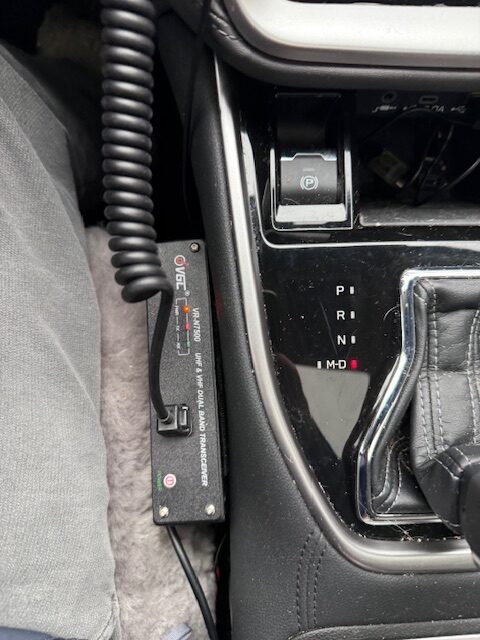
Recently VGR brought out the VR-N7600, an evolution of the N7500 that adds built-in GPS, compass, APRS, a 6-pin mic connector instead of the 7500’s RJ-45, and a built in USB-B charging port for accessories. The 7600 is much less dependent on being paired to a phone\tablet than the 7500.
Both are headless 50W VHF\40W UHF with bluetooth capability, including BT KISS TNC. VR-N7500 is still available from vendors for the near future for about 60% the cost of the N7600. That gap closes depending on speaker mic package options on the older model with the entry N7500 starting at pocket change under $200 up to $260 with a BT Speaker Mic. The N7600 is listed at $340 with a BT Speaker mic including a full-color screen. I bought my N7500 last year, this is a review of my experience with it. I’m not sure i feel the need to add the 7600 to my collection.
The unit itself is average-sized unit at 5.5″x4.5″x2″ wrapped in a finned, satin black aluminum case with a cooling fan mounted at the back. The front of the radio has 3 bright lights (even in direct sun), microphone RJ-45 jack, and a very small, very stiff soft power button that doubles as the BT pairing button. The backside has your RF connector and a fused power lead terminating with a three-blade plug. That’s it. No audio jacks. No I\O ports. Just the basics. This radio is designed to be mounted out of sight, it can be turned on\off, BT pairing, channel selection, A\B selection, and VFO selection from the supplied wired speaker mic. The number of channel banks or zones is unlimited (so they say) and limited to 16 per bank with just the radio, 32 if paired with the phone. It has what is quickly becoming the standard of pre-programmed WX channels and WX Alerts. It pulls 8-10 amps on extended TX when powered by 13.4V DC supply in the shack or in the car.
The plus and minus of this radio is its dependency on mobile devices. Let’s start with the pluses because I’m in a happy mood today. There’s actually two primary applications available for these radios as well as the HT versions – VR-N76, Radiooddity GR5WB, or the BTECH UV Pro that are on similar firmware – from VGC (HT App) and BTECH (BTECH HT). The BTECH app lacks the Satellite functionality available in the VGC app. The UI is decent. Pair the unit and the programmed channels show up in a grid with multiple options at the bottom to toggle scanning, single watch, dual watch, VFO, and power levels. Right, no diving into 300000 menu levels just to switch from single to dual watch. Active channel selection is just a tap away.
Swipe left and – if you have configured APRS in the settings – up pops the live APRS map with current channel overlay. The radio does not have a GPS or compass module, it uses the one in the phone. APRS setup is straight forward and functions as expected, it even can be an iGate and\or digipeater. Tap a the menu and you can send APRS messages to contacts (and favorite contacts in the phone). You can digital mute the designated APRS channel (yes, you can tell it what channel to use and it does it automagically) so you don’t have to hear the screech, just a very faint click when it sends. And with the latest firmware update, Smart Beaconing and Mike-E is now a thing. Not as complete as using a dedicated APRS app but a far sight better than other OEM applications. Changing channel settings is just a matter of tap and hold until the dialog opens, then get to editing. Again, no multi-level menu nightmares. Firmware updates are also via BT and I’ve had zero issues across 7-8 updates.
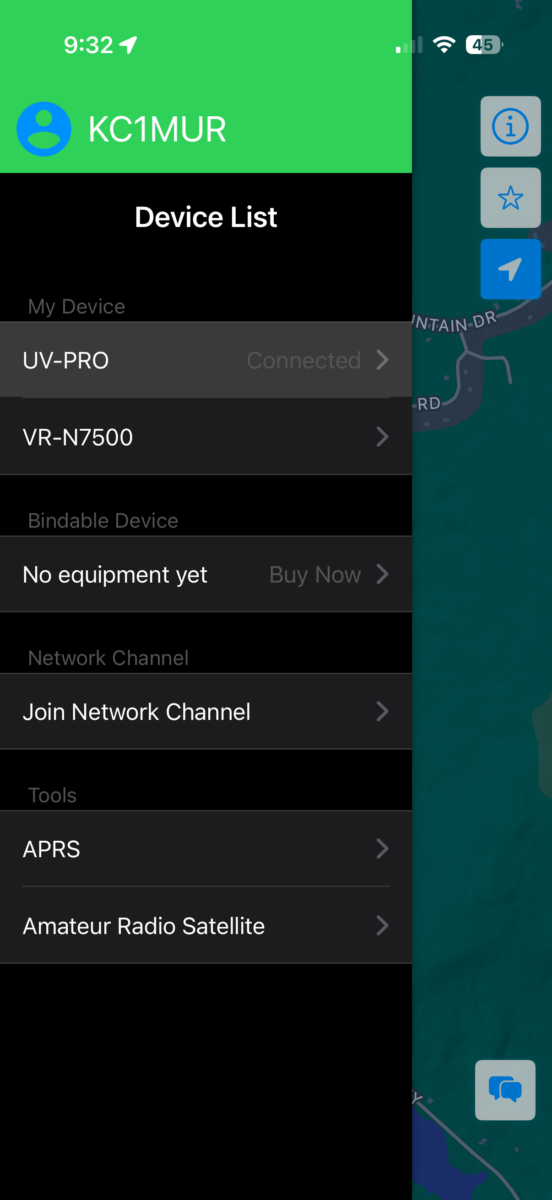
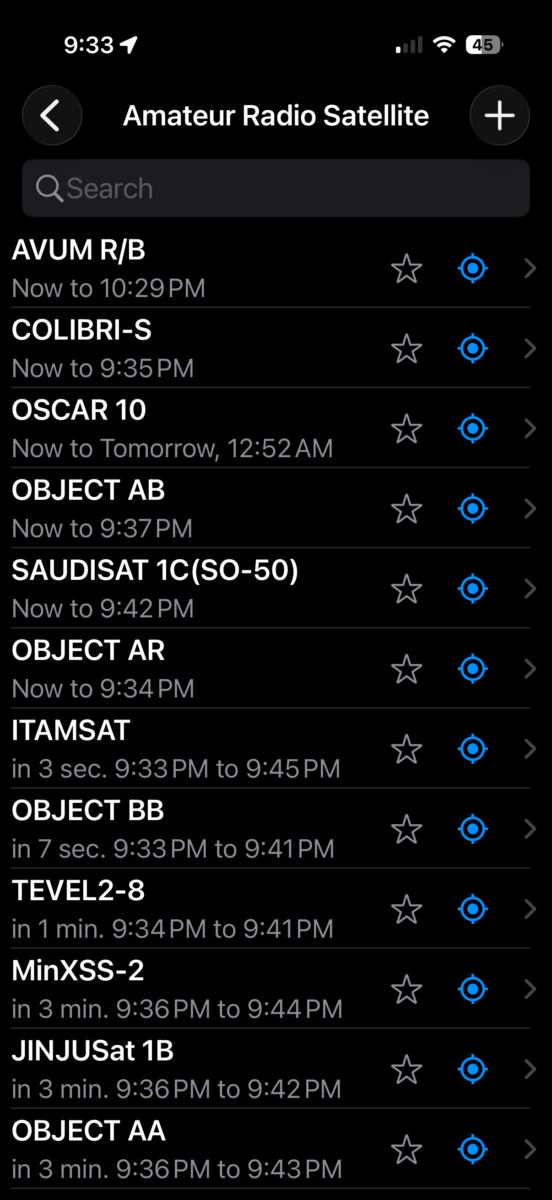
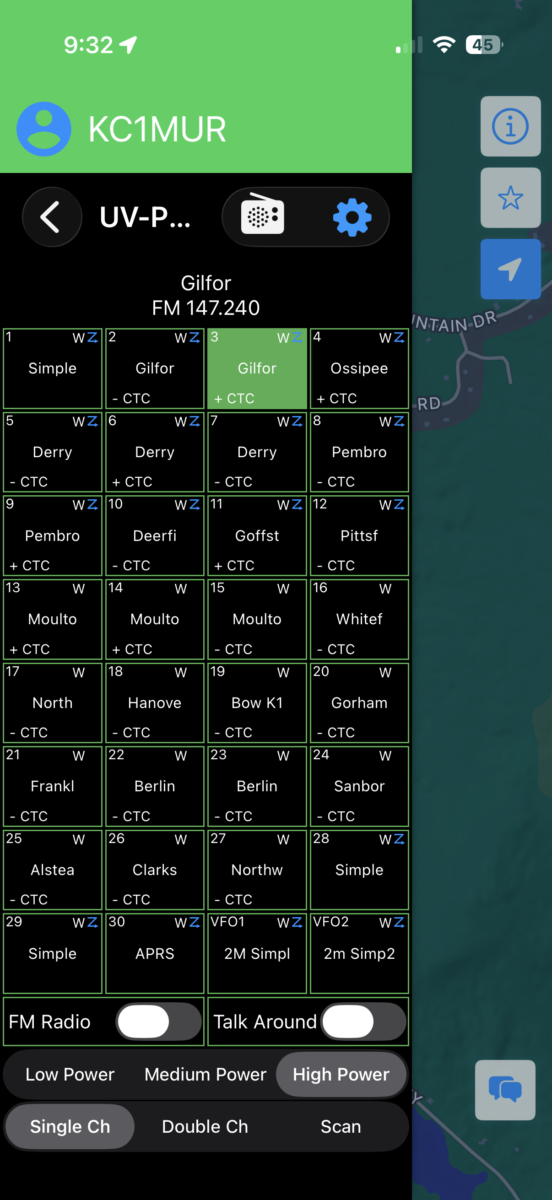
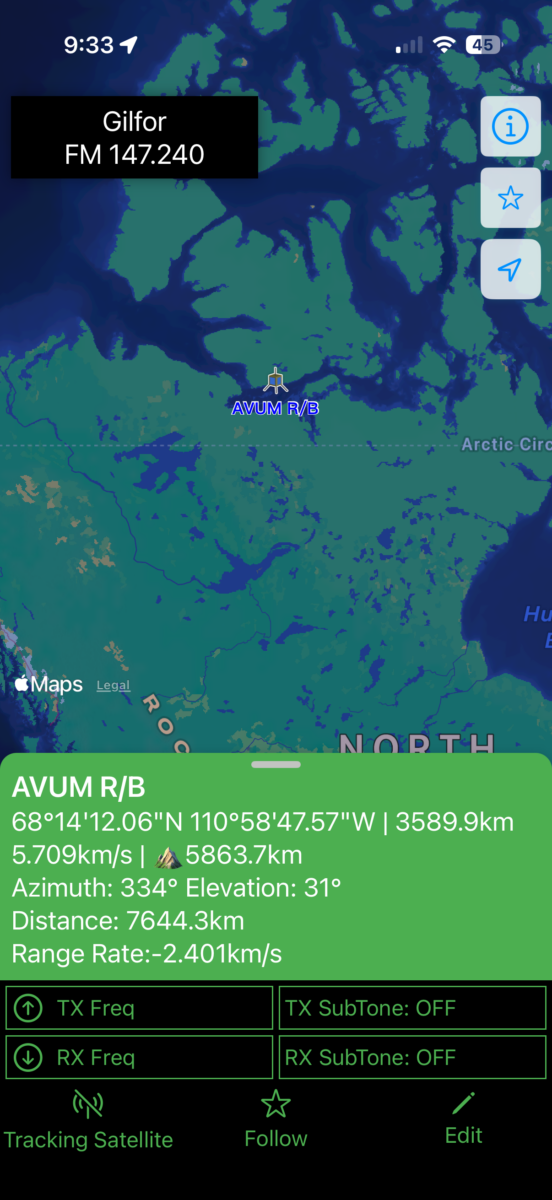
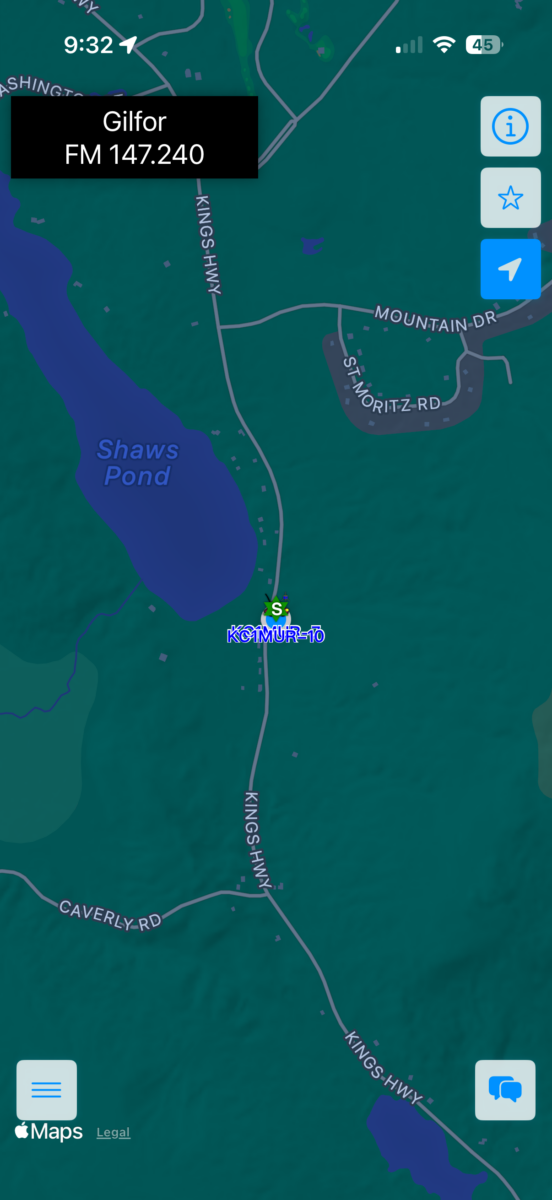
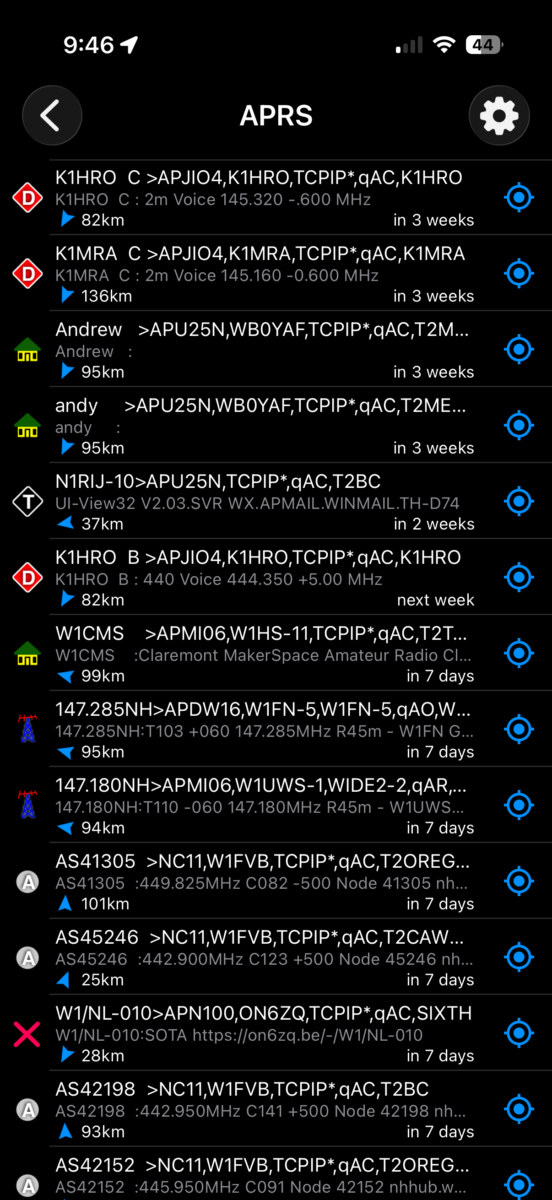
Now the minus: it can only be programmed via Android or iOS apps or the open source Windows\Linux application HT Commander. This is done over BT and the pairing can be confusing for some. The mobile apps pair the radio via the application, not the operating system module. If you pair the radio to your phone and then attempt to bring it up in the app, 9 times out of 10 it won’t see it. If you ignore phone pairing and let the app initiate the connection, it works. The exception is HT Commander, you have to pair it to the PC, then connect in the app. There is an import function from CSV, but no export function to CSV unless you use the PC application HT Commander. This app also allows importing from CHIRP CSVs, a HUGE plus in my book. Thought, it doesn’t automatically import the channels, it opens them up in a grid identical the existing bank grid, then you drag and drop channels. Still easier than inputting one by one on your phone.
Then there’s third-part apps like APRSDriod, RadioMail, Winlink, and other digital mode apps that support BT KISS TNC. They do see it and it does work, including CAT control. Huge bonus and I guess this is a plus, not a negative.
Without a doubt, the biggest minus to this radio isn’t even the radio. It is any of the 4 speaker mic options made for it. The stock wired unit (HM-78) can control the basic functions but since it doesn’t have any visuals, you are stuck with a computerized female voice YELLING “CHANNEL 2” or “BLUETOOTH ON.” I’ll give it props for good sound quality on TX and loud but a bit tinny on RX. The coiled cord is average length but the RJ-45 connector has subpar strain relief and I don’t 100% trust it. Option #2 is a BT version (BHM-78) that is functional and physically similar to the wired item, just obviously without the cord. #3 is the same form factor but with a much-needed LCD display (BHM-88) so instead of being yelled at, you can see what you are selecting. The font is decent sized and the color choice easy to read in all but direct sunlight. Battery life is decent with about 30h standby before having to charge via USB-C. #4 – if you can find one as it appears they have been discontinued – is the one I have, the BHT-78 Bluetooth unit. This is a funky piece. Instead of looking like a hand mic, this is in a similar form factor to an HT with the speaker and mic below the screen and a short, stubby antenna (less than 2″). The antenna is there because this has the GPS module in it, negating the need to pair to a phone once initially set up. Screen is decent sized, the font not so much and the active RX channel lights up red. Impossible to read in anything other than a darkened room. At least you can still see it on the phone if you need to, they can work together. Volume is a standard rotary knob, though it is software-driven, not a rheostat so it isn’t quite as smooth or responsive as an electro-mechanical options. All 4 mics have easy to swap connectors on the back to give you a variety of standard clip\post options for securing the piece. And yes, you can run any of the BT mics in parallel with the wired mic, though the in this case only the UP\DOWN channel rocker switch and PPT are active on the wired mic.
So, did you notice what was not mentioned at all? Right. NONE of the mics have a keypad. All alpha-numeric – including DTMF – has to be done in the app (not applicable to the N76\BTECH UV Pro, which can function normally without the app – including direct-in-radio programming) and this is a bit of a bummer if you like physical keys and one-device operation.
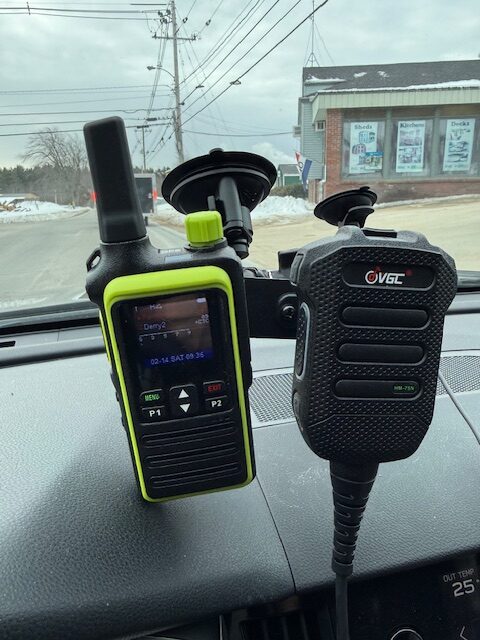
Let’s be real, none of the above matters if the radio is the mobile equivalent to a UV5R. Happily, it isn’t. It is a damn good operating radio. Purity is beyond acceptable. TX output on 146.520 is 51.9W, 446.000 is 39.9W. When paired with a Tram 1191 through-glass antenna on my ’24 Outback (it has a stubby counterpoise to help offset the lack of a ground plane) I can consistently reach out to repeaters 40-60 miles away 5-9. At home with a half-wave vertical dipole or j-pole, that stretches to 50-65 miles. This radio has pleased me so much – partially due to the flawless BT KISS TNC – that I pulled my Yaesu FT-7900r out of my car. After doing that, I got several queries from contacts what I did to improve my TX. They struggled to believe the performance coming out of a non-Yaesu\ICOM\Motorola radio. I love being able in the amount of time it takes to switch apps to go from checking in on a repeater to firing off a Winlink message all while beaconing APRS and then back again.
Since they share the same app, if you have the VR-N76\BTECU UV Pro HT, you can swap between radios with a single tap in the phone app, though the channels programmed are discrete to the radio and I’ve yet to find a way – outside of using HT Commander for export and then shipping them to the phone as files via email or direct download- to easily standardize the channel banks.
SIDE NOTE: Out of the box it can receive FRS\GMRS frequencies, you have to tap the voltage entry in the phone app setup menu 10 times to unlock TX on them. Since this doesn’t lock out the ham bands, legality of this is questionable, but doable.
SIDE NOTE #2: Network capability. Wut? So if you pair your unit with an Android phone (not supported currently on iOS) or tablet connected to the internet, you can bind an analog frequency and\or channel to a “network channel.” On another Android device, also connected to the internet with the same login, you can then use your second device to remotely control (change freq\CTCSS tones, TX, and RX) the N7500 from anywhere with an internet connection. Say you don’t want to miss your local net but you are 9 states away on business and your net is on analog-only. No problem, set the net repeater as a network channel and Bob’s your uncle, you can join in! Apparently there is a way to share a network channel in such a way that it becomes basically a group chat via the phones and analog, though I haven’t tested that yet. Might be useful for small nets that are geographically distant and not everyone has access to – or want to use – digital voice.
I won’t argue the VGCs and their cousins from Radiooddity and BTECH are perfect. They aren’t. They have some quirks, usage flaws, and restrictions that you don’t get on a standard mobile from the Big Three. But, in return you get a BT KISS TNC built-in, clean signal, clear RX, endless channels, stealth mounting, remote operation, and features at a very competitive price. I’ve replaced my daily carry and my mobile unit (previously both Yeasus) with the UV Pro and VR-N7500 respectively with zero regrets. Great radios? For the price, yes, overall no but damn good ones. Fiona agrees :).

Author: Scott
General class operator
No responses yet